The Dispatch: Four Years of War
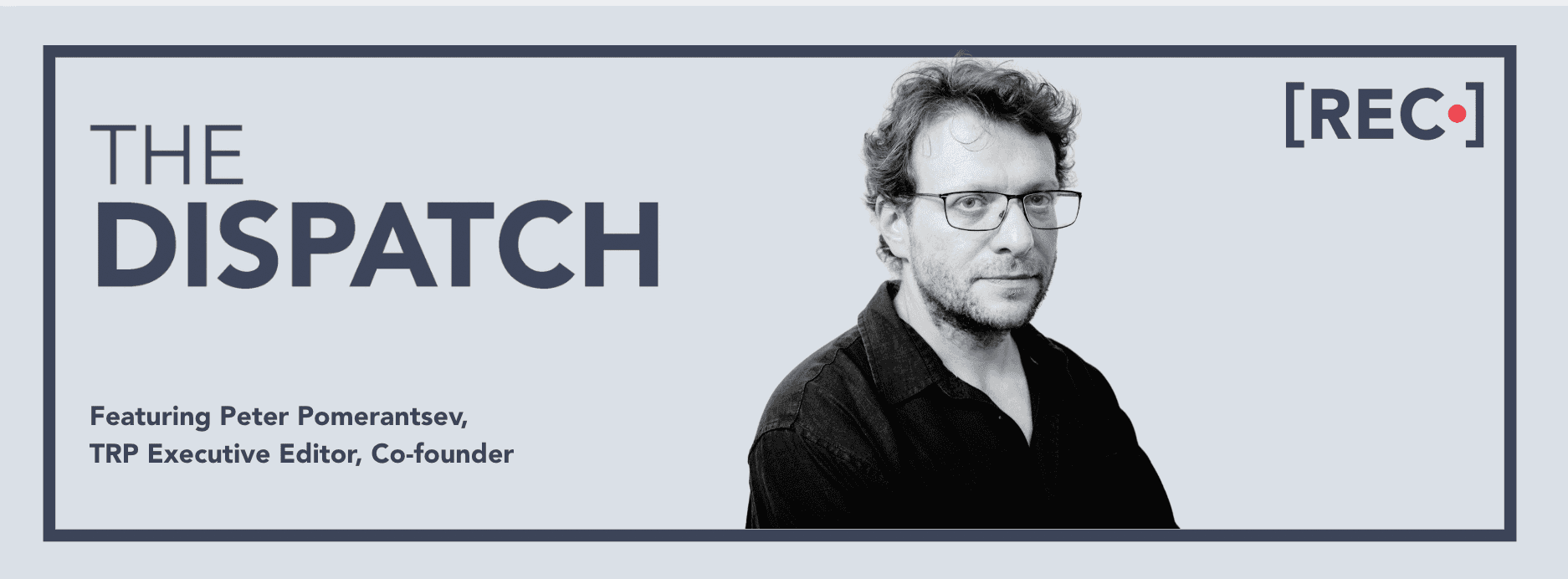
For our February edition of The Dispatch, The Reckoning Project’s monthly column, we mark the fourth anniversary of Russia’s full-scale invasion of Ukraine with a reflection from our Executive Editor and Co-founder, Peter Pomerantsev.
By: Peter Pomerantsev
Kyiv. February 24, 2026. The four year anniversary of the full scale invasion. And still Russia doesn’t understand the first thing about Ukraine.
It’s often minus 20 centigrade this month. Russia has spent the winter bombing the capital’s energy system to smithereens. Electricity and heating have become a rarity across town. The kinetic attacks are followed with propaganda encouraging Ukrainians to rise up against their government and take out their resentments against each other.
Instead of enmity however the city is responding with unity. I spent last weekend at a soup kitchen ladling stew to pensioners in one of the most afflicted areas, Troyeshina. Neighbours came out of the dark high rises to bring food to their neighbours. During the day there had been music on the ice. The whole area came out to dance and get their mood up together.
Russia made the same misreading of Ukraine in 2022. They thought the country would fold when Russia invaded. That because Ukrainians were used to complaining about their government, they would welcome a new leader from Moscow. Instead, the whole country fought as one vast family. Everyone played their part. Ukraine's remarkable resistance to Russia's invasion is a true peoples' war. This is a country that does not look to politicians to tell them what to do. The country survives because people take agency and work with each other to get weapons to the front, supply hospitals, organise partisan movements and help refugees. In the thing once known as 'the West' we often lament the loss of community--in Ukraine it is thriving and winning against the invasion of a cruel Empire.
It was this spirit of collaboration between different sectors that inspired us to create The Reckoning Project in the first weeks of the invasion. Our idea was to put together two professions that rarely work together, lawyers and journalists, in the greater cause of truth and accountability. We also brought Ukrainians together with the experience of Syrians who had experience of holding Assad’s Russian backed forces accountable.
It was an innovation grounded in the idea that we could be more than the sum of our parts if we worked together. To put it simply: lawyers need journalists and other story-tellers to collect evidence and to keep up the public pressure to bring perpetrators to justice. Journalists need lawyers to bring the evidence they find to courts of law, help impose sanctions and inform international bodies like the UN.
Journalists are frequently the first witnesses to war crimes, yet the interviews they conduct are often inadmissible in court because of how they are structured. To address this, we train our team to prioritize ethical, trauma-informed techniques that avoid exploiting or re-traumatizing victims. Manipulative questioning not only harms the individual but also renders their legal statement unusable. Consequently, our reporters spend days or weeks building trust, allowing witnesses to share their stories at their own pace without being forced to provide evidence.
Once collected, these testimonies are analyzed by lawyers and archivists in Berlin and London who map out gruesome patterns of repeat violations. Their work demonstrates that these are not isolated incidents, but rather part of a broader Russian strategy. By integrating journalism with legal expertise, we expand the reach of justice to include both the court of public opinion and formal law. Our mission is to transform abstract notions of "truth and justice" into tangible accountability for the powerful.
The memorialization of war crimes also plays another role--making the bonds of society stronger. The effect of the war criminals wreak is not just immediate pain and suffering, but the long term traumas that make a damaged society so atomised, suspicious, and self-destructive that the people who live in it lose their ability to open up to one another and their bonds become weak and brittle. This is why it is so important that in this war testimonies are being collected as the conflict rages: in most wars they only begin to be collected after the conflict stops, when it is so difficult to reconstruct the truth years later.
Ukrainians are making sense of their pain as the war continues, and that in turn makes the society stronger. The path to a strong community starts with creating conditions that enable people to communicate their fear, pain, guilt and even shame with one other. And that, in turn, helps make for a stronger society- the type that can persevere through this long, dark, cold, murderous winter.
Media inquiries: info@thereckoningproject.com
Stay Updated
Subscribe to receive the latest news, press releases, and updates from The Reckoning Project directly to your inbox.